Elsewhere is a narrative research project exploring ideas of home, movement, and belonging through lived experience.
This chapter unfolds along the Bangladesh–Monfalcone axis, connecting rural poverty and European industrial peripheries to question how migration is framed, perceived, and managed.
Not to explain or judge, but to observe what emerges when complexity is not simplified.
This entry follows
Part#1: THE CROSSING
The Cristiano Ronaldo Syndrome
In Bangladesh, I’m constantly asked for an average of five selfies a day.
People I don’t know, met on the street, in villages, in markets. One day a child even asks me for an autograph. I ask him if he knows who I am. He smiles and says no. He doesn’t care.
A close friend, whom I told the story to over the phone, commented: “You’re white… you’re instantly a rock star!”
At first it makes you smile. Then it unsettles you. Then it makes you think.
It’s not personal admiration. It’s projection. It’s the Western body as a symbol: possibility, elsewhere, access to a world that seems unreachable. Being photographed with me became a form of social proof, a small trophy to show others.
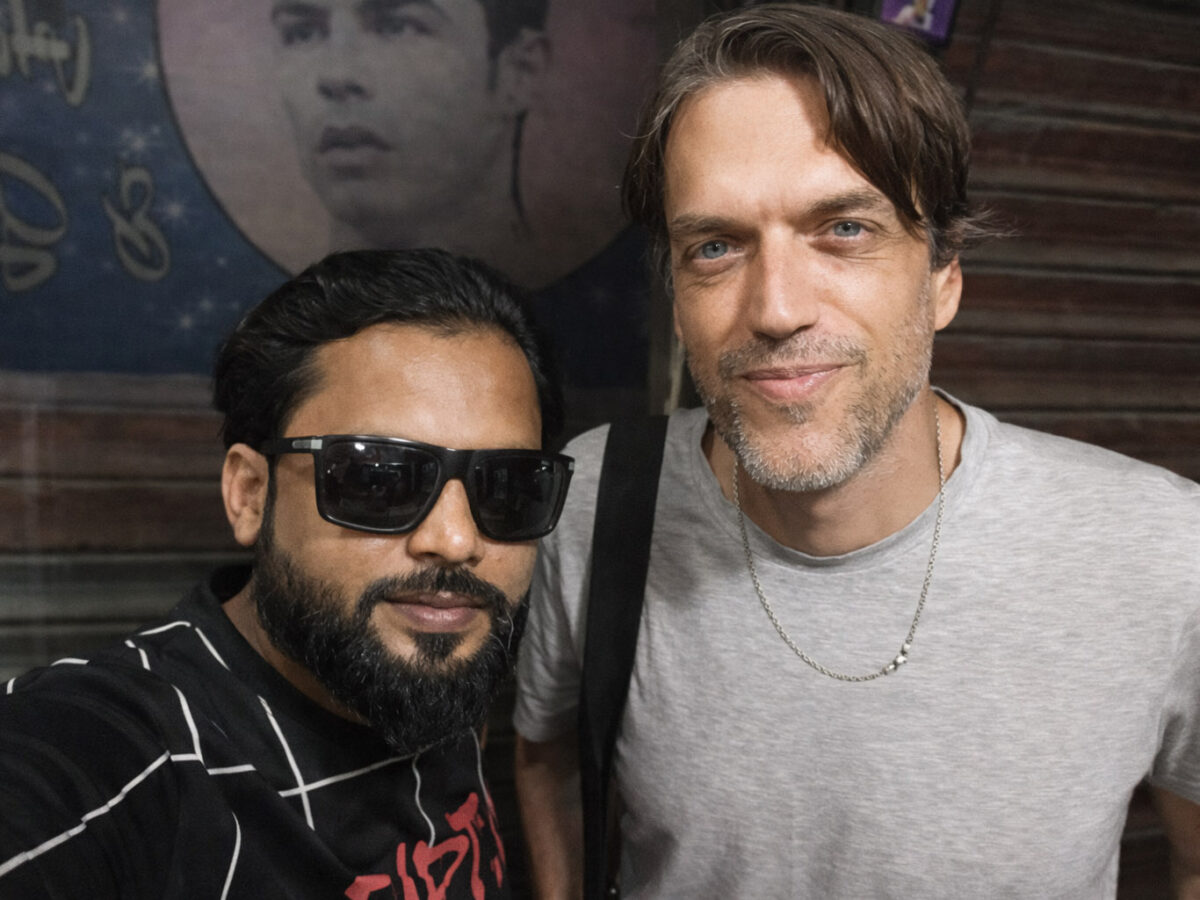
It wasn’t personal admiration. It was projection.
A body turned into a symbol.
I realized how easy it is, everywhere, to reduce someone to what they represent rather than who they are.
That day, I was the symbol. I was simplified.
In this exchange of gazes there is something deeply human and deeply violent at the same time. Because when you stop seeing a person and start seeing a symbol, you lose complexity. And without complexity, it becomes easy to build myths, fears, enemies.
I could leave. They couldn’t.
I was passing through. They remained there, inside a system that offers very few ways out.
Being ‘the white man’ for a while made me uncomfortable in a way I didn’t expect.
It forced me to look at the gaze itself. We all look at the other for what they represent, before who they are.
The only thing that makes the difference is this: whether that gaze remains curiosity, or becomes a cage.
Islam and Hinduism: a coexistence we don’t talk about
In Bangladesh, about 98% of the population identifies as Muslim. A small percentage is Hindu.
And yet, in the rural villages I pass through, I don’t see conflict between these two communities.
They often live in different areas of the same village, it’s true. But they know each other, respect each other, take part in shared activities. I don’t witness open tension.
I don’t hear many speeches about identity.
I see people sharing buses, markets, even festivals.
Coexistence appears less discussed, more practiced.
The differences are visible. Very much so.
Hindu women, for example, do not wear the veil, sit wherever they want on buses, start conversations without hesitation. And yet this does not generate friction. It is simply part of the social landscape. I wonder how muslim women feel, or think about them? Are they any envious? Do they ever dream to start joking with a white dude on the bus, like Chaya did?
On a local bus, one day, I quickly become friends with a very friendly and fun Hindu woman who invites me to a festival dedicated to the goddess Kali. She introduces me as a central guest, almost with pride. Not because I’m important, but because I’m “other.” A presence that expands the world, rather than threatening it.
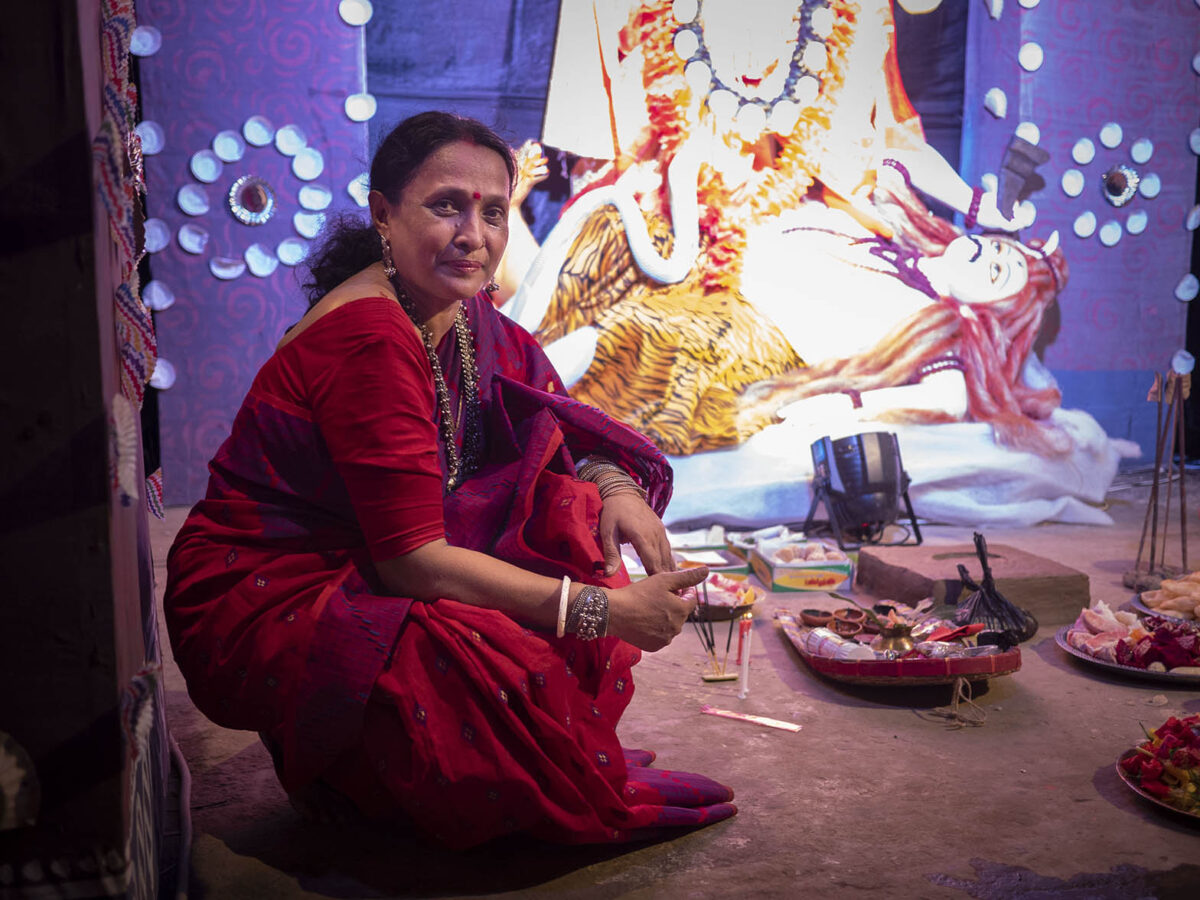
This coexistence is neither ideal nor perfect. I am not describing a multicultural paradise. But it works. And that is what stands out: it works without rhetoric, without conferences, without slogans.
In other contexts I know, coexistence is often debated in abstract terms.
Here, it seemed to unfold as routine — quiet, non-ideological.
I didn’t hear many speeches about values.
I saw people sharing spaces, rhythms, small fragilities.
Perhaps because when survival is a shared condition, identity stops being a weapon.
Almost no one ever talks about this kind of normality.
And perhaps that is precisely why it is worth telling.
The Heart as a Church
In Bangladesh I’m often asked whether I’m Christian.
At first I answer yes. Not out of conviction, but to avoid unnecessary friction. It’s the simplest answer, the most understandable one. In a context where faith is not a private option but a social structure, declaring yourself outside any religion opens questions that there isn’t always time or space to go through. A bit like being asked whether you support Inter or AC Milan and answering that football doesn’t interest you. Better to support the “wrong” team than not support any team at all.
When relationships become deeper, though, I tell the truth. I explain that at fourteen, at the time of my confirmation, I had been given a choice: continue or stop. And I chose to stop. From there on, I followed a personal path.
I explain it this way: my heart is my church, my religion is love. I believe that good people recognize each other and walk the same road, even if they start from different trajectories.
It’ wasn’t’s always a comfortable answer. In some cases I’m asked whether I think my word is worth more than God’s. I answer no. And almost always, after a moment of silence, common sense prevails. Not agreement, but respect.
That experience reminded me of something simple: coexistence does not grow out of uniformity, but out of the ability to stay within difference without turning it into a threat. I was tolerated also because I was a foreigner, that’s true. A double standard exists. But within that imperfect, real space, relationships worked.
Not because we were the same.
But because no one was trying to convert the other.
In an era in which faith is used as an identity weapon or as a tool of power, that fragile balance felt more honest to me than many of the principled proclamations we are used to.
Sometimes we didn’t share the same religion.
But for a while, no one tried to use it against the other.
As Long as the Boat Goes…
One day I’m planning to meet some fishermen.
The plan is simple: go to the coast, talk, set a time for the next day. Within half an hour, without me really understanding how, I find myself on a boat. At sea. With the sun in my face and the wind on my skin.
At first I’m fine with it. It’s beautiful. Unexpected.
Then, after a (long) while, I ask myself: what are we doing here?
I pass the question on to my collaborators. They look at each other, puzzled. First they mutter among themselves, then a discussion starts. Finally they smile and answer: we don’t know. Silence. An exchange of glances. Eyes crossing, searching for meaning. Then everyone burst out laughing.
The sea knows. We don’t.
In that moment, chaos stopped feeling like a mistake. It’s a way of moving forward. Things happen, take shape, change direction. There isn’t always someone steering. And it isn’t always a problem.
I’m used to thinking that without control everything derails.
That without a plan, time is wasted.
On that boat, I saw something else: movement without certainty. That without a clear direction you lose time, efficiency, meaning. In Bangladesh I saw that sometimes the train keeps going anyway. Even if no one is in charge. Even if the destination isn’t clear.
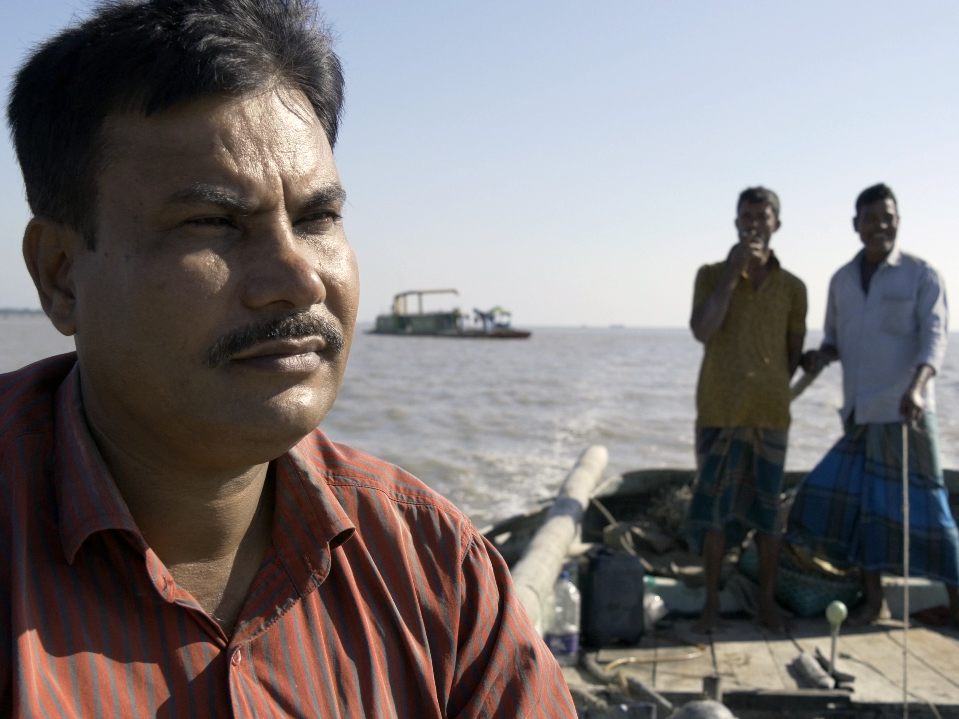
I’m not idealizing chaos. It has a cost. It makes you miss opportunities, creates frustration, makes everything more fragile. But it also has a quality we’re losing: the ability to stay inside the unexpected without experiencing it as a constant threat.
Maybe the point isn’t choosing between order and chaos. Maybe it’s understanding how much control we actually need in order not to be afraid of losing it.
That day we didn’t meet the fishermen.
But I learned something about how some people move through the world: by letting things happen, instead of demanding that they obey.
Brotherhood
At a certain point in Bangladesh, the work begins to stall.
There are constant delays, missed commitments, difficult communication. I’m focused on the project—deadlines, structure, delivery. They were immersed in daily survival, in chaos, in other urgencies that I struggled to see. Tension is growing. And I’m starting to feel alone.
Then I do something we don’t often do: I stop explaining the work and start explaining myself. I say that I’m struggling, that I risk getting stuck, that the situation is putting me under pressure and the work is starting to suffer. I don’t talk about efficiency. I talk about risk, stress, fear of failing.
Everything changes.
Within a day or two, they close ranks. They reorganize their time, made themselves available, found solutions I hadn’t seen. Not because the project mattered. But because I mattered to them.
That moment stayed with me. Not as an abstract value, not as a noble word, but as a concrete response when someone in the group is in trouble.
I’m familiar with a form of support that is verbal, careful, measured.
What I experienced there was different.
Fewer explanations. More reorganization.
Less discussion. More presence.
I don’t know if this belongs to a place.
I only know how it felt.
Probably it’s not always like that, but when it happens, it really happens.
This was my experience.
Perhaps the difference lies entirely here: we help when the problem is clear and well defined. They help when they feel that you are the one in difficulty. And nothing more is needed to move forward together.
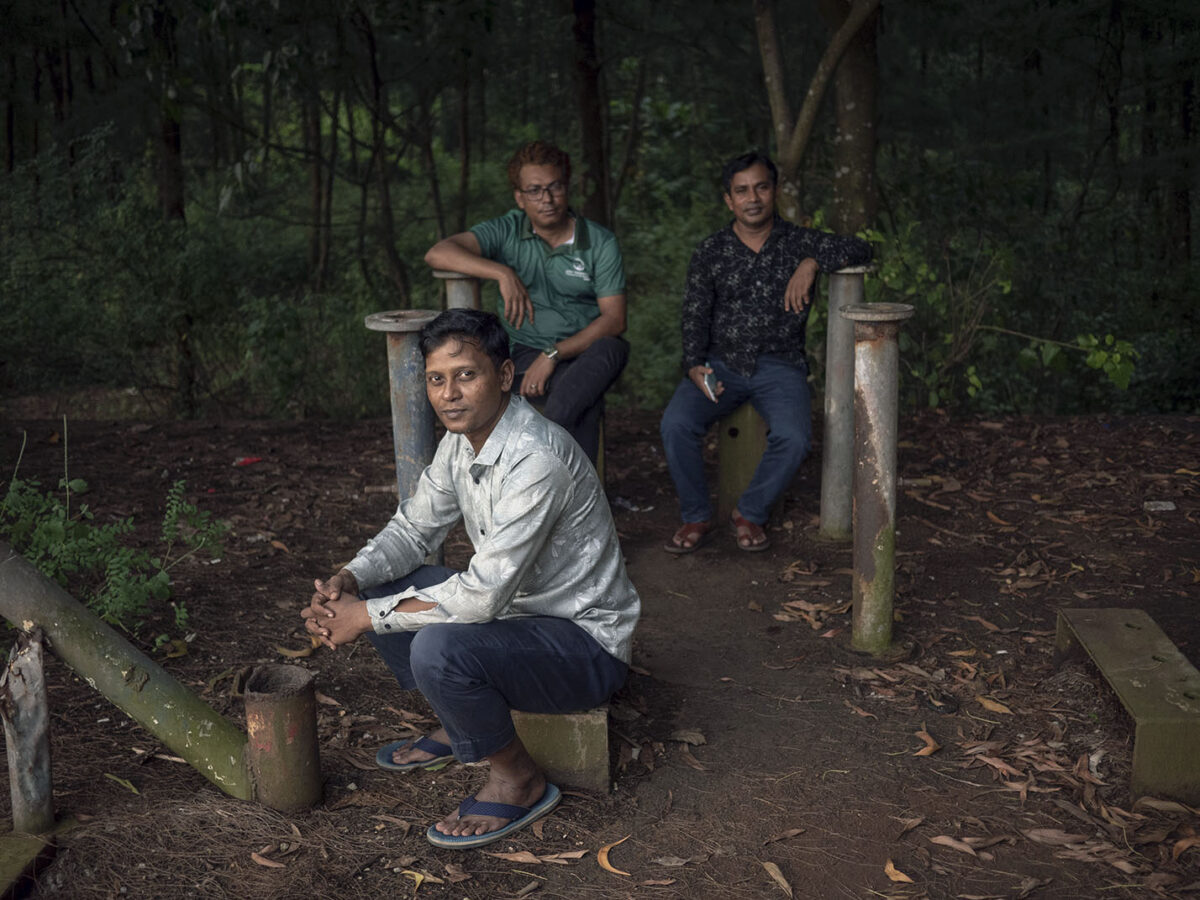
Here the Circle Tightens
After that episode of brotherhood, I begin to notice a difference that until then I hadn’t been able to name.
In Europe, we are very good at recognizing discomfort. We listen, we comment, we empathize. We say the right words. But often the help stays there: verbal, symbolic, polite. When difficulty requires time, presence, personal sacrifice, the circle tends to widen, not tighten.
In Bangladesh I saw the opposite.
Few words, no analysis. But when someone is in difficulty, the group closes ranks. Not because there is a protocol, but because the bond comes before organization. Before efficiency. Before comfort.
I’m not saying one model is better than the other. I’m saying they are different. And pretending they aren’t makes us blind.
Here, the circle tightens when the problem becomes personal, when it touches our interests or our immediate circle. There, it tightens when the person is in difficulty, even before fully understanding why.
Perhaps this is also why we struggle so much to build lasting relationships in our hyper-individualized societies. We have learned to protect ourselves, not to depend, not to disturb. But in doing so, we have lost something essential: the ability to be supported without having to justify ourselves.
Brotherhood is not about feeling similar.
It is about recognizing when someone is about to fall and deciding, together, not to leave them alone.
And that, wherever you are in the world, changes everything.
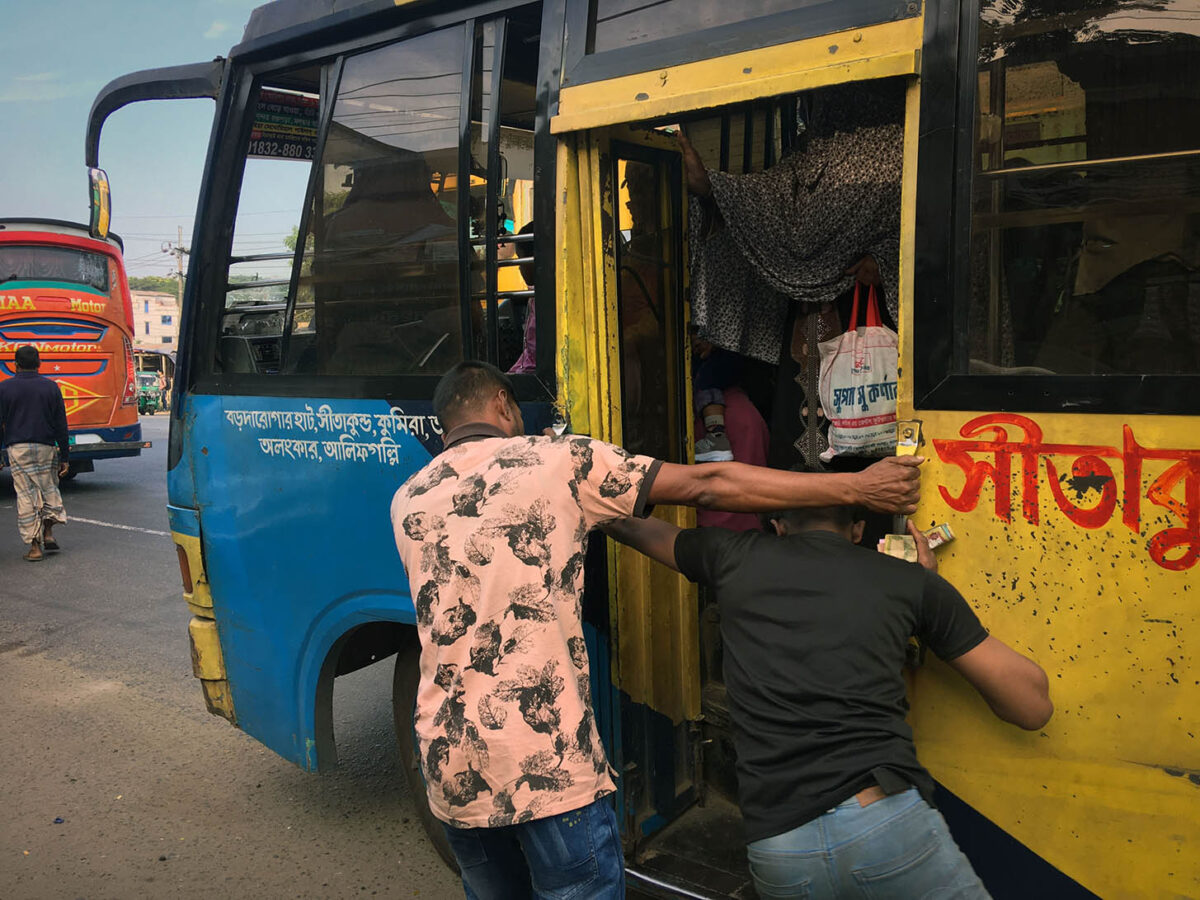
When I Asked the Women
Once, in Bangladesh, guest by a numerous and friendly family, I want to ask women what they think about their lives.
I don’t even have time to finish the question. The men answer for them. Naturally. Without aggression. As if it is obvious.
“They have their role. They stay at home, cook, raise the children. They’re happy like that.”
I insist, calmly. I say that the question is for them, not for those speaking on their behalf.
I’m told there is no need. That the answer is already there.
Only later, in a protected space—away from gazes and hierarchies, and thanks to a valuable collaborator—those same women speak. And when they do, frustration emerges. Fatigue. Awareness. Some tears. And above all, the absence of margin: the role is that one; socially it is that one; religiously it is that one. It is not up for discussion.
Attention! Before drawing your sword and shouting a hooligan slogan, know this: I am not writing this to judge a culture different from my own. That would be too easy and deeply dishonest. I write because that episode cracked some comfortable simplifications—my own included.
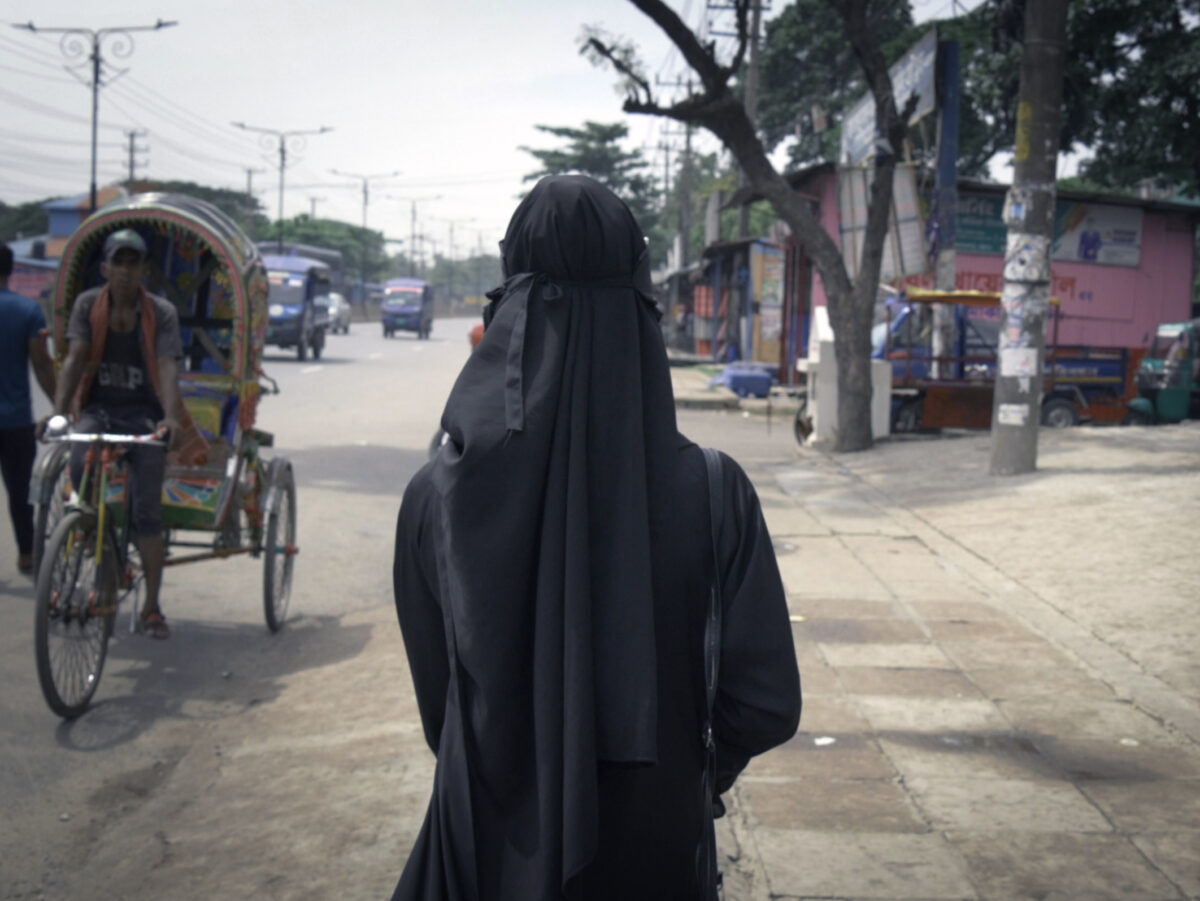
I came out of that experience more skeptical than before about the idea of “integration” presented as a linear, painless process. Not because it’s impossible, but because it requires will, tools, and time from both sides. And because on certain issues—like the role of women—slogans and good intentions are not enough.
Perhaps the way forward is neither forcing assimilation nor retreating into rejection. Perhaps it is working on analogies, creating spaces of mutual respect, accepting that some differences are not resolved, but managed.
In that situation, complexity had nowhere to stand—
not in politics, not in economics, not among those who govern through fear.
And so, once again, the price is paid by those with the least voice.
Those no one has ever truly asked what they think.
Integration? Not Quite.
After two months in Bangladesh, I came back with fewer certainties than I had when I left.
One, in particular, cracked more than the others: the idea that integration is a natural, linear, almost automatic process.
It isn’t.
Not because people “don’t want to,” but because integration is often framed as an abstract moral duty, while in practice it is a complex, asymmetrical, exhausting process. It requires tools, time, cultural mediation, protected spaces. And above all, it requires real willingness on both sides.
On certain issues—the role of women, religion, the management of authority, the relationship between the individual and the community—the distances are not marginal. Pretending otherwise is not inclusion; it is the removal of the problem.
This does not mean rejection. It does not mean closure.
It means taking reality seriously instead of domesticating it to make it more digestible.
Perhaps the mistake lies in thinking of integration as assimilation: adapting, conforming, becoming “like us.”
The idea of “us” becomes fragile the moment you try to define it. And more importantly: who decides which parts of a culture are negotiable and which are not?

After this experience, I believe the point is not to erase differences, but to manage them. To work on analogies, to create spaces of mutual respect, to accept that not everything converges. That some tensions remain. And that ignoring them only produces frustration, ghettos, latent conflict.
Narratives of integration often simplify realities that are anything but simple.
Reality, as often happens, is far less comfortable.
And far more urgent.
You can learn more about Elsewhere here: https://primipiani.net/elsewhere/
No Problem, I Love You – A selection of photos from Bangladesh: https://lyno-leum.com/portfolio/no-problem-i-love-you/